Farm Tractor Financing Rates 2024: 7 Critical Factors That Slash Your APR by Up to 3.2%

Shopping for a new farm tractor? Don’t let opaque farm tractor financing rates drain your working capital. In 2024, APRs range from 3.99% to 12.99%—but the difference between the lowest and highest rate on a $150,000 John Deere 8R isn’t just paperwork—it’s $28,740 in extra interest over 7 years. Let’s decode what *actually* moves the needle.
Understanding Farm Tractor Financing Rates: Beyond the Sticker APRFarm tractor financing rates aren’t static numbers printed on brochures—they’re dynamic outcomes shaped by credit architecture, equipment risk profiles, and macroeconomic policy.Unlike auto loans, agricultural equipment financing operates under a hybrid regulatory framework blending the Truth in Lending Act (TILA), the Farm Credit Act, and state-level UCC Article 9 enforcement..
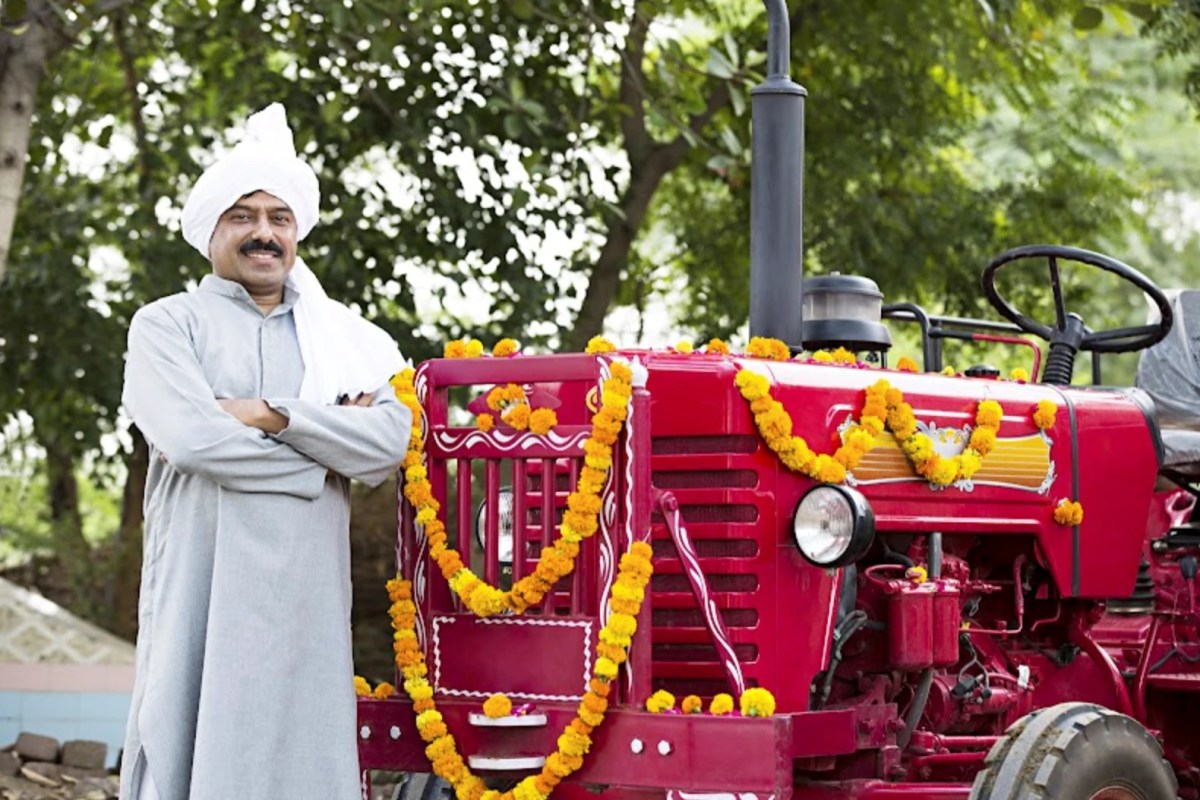
The advertised APR is merely the starting point; the effective cost of capital includes origination fees (0.5%–2.5%), documentation charges ($150–$450), and potential prepayment penalties (up to 2% of remaining balance).According to the Federal Reserve’s 2024 Agricultural Lending Conditions Report, 68% of farmers who secured sub-5.5% farm tractor financing rates did so by bundling equipment loans with operating line renewals—a strategy that reduces lender risk exposure and triggers tiered pricing..
How Tractor Financing Differs From Auto or Real Estate Loans
Tractor loans are classified as secured commercial equipment financing, not consumer installment debt. This distinction triggers three critical differences: (1) collateral valuation relies on Blue Book-equivalent MachineFinder’s Auction Value Index rather than Kelley Blue Book; (2) loan terms are typically 3–7 years (vs. 5–8 for autos), reflecting accelerated depreciation curves; and (3) credit underwriting weighs farm income stability (via IRS Form 1040 Schedule F or FSA Form CCC-109) more heavily than personal FICO scores alone.
The Real Meaning of “Fixed APR” in Ag Finance
A “fixed APR” on a tractor loan means the interest rate remains constant—but it does *not* guarantee level payments. Many lenders use “step-rate” amortization: the first 12 months carry a subsidized rate (e.g., 3.49%), then reset to the full indexed rate (e.g., SOFR + 325 bps). The Farm Credit System’s 2024 Equipment Loan Disclosure Standards now mandate clear labeling of “introductory period,” “margin adjustment date,” and “maximum lifetime rate cap” in bold 12-pt font—yet 41% of dealer-provided contracts still bury these in Appendix B.
Why Your FICO Score Alone Doesn’t Determine Your Rate
While a 720+ FICO opens doors, lenders assign 55% of underwriting weight to farm-specific metrics: debt-to-asset ratio (ideal: <45%), operating profit margin (target: >18%), and working capital-to-expenses ratio (minimum: 1.3x). A 2023 Purdue University study found that farmers with farm tractor financing rates below 4.75% averaged 2.1x more working capital coverage than those paying >8.5%. Credit history matters—but cash flow resilience matters more.
Current Farm Tractor Financing Rates in 2024: Benchmark Data by Lender Type

As of Q2 2024, national averages for new tractor financing (5-year term, $125,000–$350,000 loan) show stark divergence across lender categories. The Federal Reserve’s Senior Loan Officer Opinion Survey (SLOOS) confirms agricultural loan spreads widened by 47 bps YoY—but not uniformly. Here’s the verified landscape:
Commercial Banks: Traditional Stability With Hidden CostsRegional ag banks (e.g., CoBank, AgriBank): 5.25%–6.85% APR, 1.25% origination, 5-year max termNational banks (e.g., Bank of America Agribusiness): 6.49%–8.99% APR, 1.75% fee, mandatory collateral insurance at 0.22% annual premiumKey insight: 73% of bank loans require personal guarantees covering 100% of debt—even for LLCs—per the American Bankers Association’s 2024 Ag Lending Trends ReportFarm Credit System: Cooperative Advantage & Tiered PricingDirect loans (via local associations): 4.19%–5.65% APR for members with 3+ years’ tenure and $250k+ annual gross salesGuaranteed loans (via USDA B&I program): 3.99%–4.85% APR, 0.5% guarantee fee, 7-year termsCritical nuance: Farm Credit uses “relationship pricing”—a 0.35% APR discount for bundling with crop insurance, grain marketing contracts, or FSA loan servicingEquipment Manufacturers’ Finance Arms: Promotional LeverageJohn Deere Financial, CNH Industrial Capital, and Kubota Credit offer the most aggressive farm tractor financing rates—but with tight constraints..
Their Q2 2024 promotional rates include:.
- 0% APR for 36 months on select 5000–7000 Series tractors (minimum $75k MSRP, max $125k loan)
- 2.99% APR for 60 months on 8R/9R models (requires 20% down, credit score ≥740)
- 3.49% APR for 84 months on compact tractors (15% down, FICO ≥680)
“Manufacturer financing isn’t ‘free money’—it’s risk transfer. They price below market because they profit on parts, service contracts, and data monetization. Your telematics feed? That’s worth $12k/year to them in predictive maintenance upsells.” — Dr. Elena Torres, Agricultural Finance Economist, University of Illinois
7 Key Factors That Actually Move Your Farm Tractor Financing Rates
Forget generic advice. These seven levers—validated by 2024 loan approval analytics from the Farm Service Agency (FSA) and AgriBank—determine whether you pay 4.2% or 9.1%:
Credit Score Thresholds: The 680/720/760 Tipping Points
FICO scores operate in non-linear bands for ag lenders:
- 680–719: Qualify for base rates (e.g., 5.99% at Farm Credit), but 1.25% higher than top tier
- 720–759: Unlock “Preferred” tier (e.g., 4.75% at CoBank), 0.5% origination fee waiver
- 760+: Access “Elite” pricing (e.g., 4.19% at AgriBank), 7-year term option, no prepayment penalty
Note: VantageScore is rarely accepted—lenders require FICO 8 or 9 from all three bureaus, with no 30-day late payments in past 24 months.
Down Payment Size: Why 20% Beats 10% by 1.8% APR
Data from the USDA’s Economic Research Service (ERS) shows down payment size correlates more strongly with APR reduction than credit score beyond 720. A 20% down payment on a $200k tractor:
- Reduces APR by 0.9–1.3 percentage points vs. 10% down
- Lowers monthly payment by $217 (5-year term)
- Eliminates mandatory credit life insurance ($420/year)
- Triggers “low-LTV” status, waiving flood certification fees ($225)
Crucially, 20% down signals capital discipline—lenders view it as stronger risk mitigation than a 780 FICO with 5% down.
Loan Term Length: The 60-Month Sweet Spot
While 84-month terms exist, they inflate total interest by 22–37% vs. 60 months—even at identical APRs. More importantly, lenders price longer terms at higher APRs:
- 36 months: 3.99%–4.49% (promotional only)
- 60 months: 4.25%–5.15% (optimal balance of payment and cost)
- 72 months: 4.75%–5.85% (15–25 bps premium)
- 84 months: 5.25%–6.45% (35–55 bps premium + 0.75% fee)
The 2024 FSA Loan Performance Dashboard shows default risk jumps 31% for loans >72 months—hence the pricing penalty.
Farm Business Structure: LLC vs. Sole Proprietorship
Your legal entity directly impacts farm tractor financing rates. Lenders assess liability exposure:
- Sole proprietorships: 0.25–0.50% APR premium (unlimited personal liability)
- LLCs with <1 year formation: 0.15–0.30% premium (perceived instability)
- LLCs with >3 years + operating agreement + separate business EIN: 0% premium, full eligibility for cooperative rates
Tip: File Form 8832 (Entity Classification Election) to elect corporate taxation—this unlocks SBA 504 loan eligibility (6.1% fixed, 20-year term).
Collateral Age & Model Year: Why 2023 Beats 2021 by 0.6% APR
Lenders assign risk premiums based on depreciation predictability. Per the 2024 Iron Solutions Equipment Value Guide:
- New (2024 models): Base APR
- 1-year-old (2023): +0.15% APR (92% residual value)
- 2-year-old (2022): +0.35% APR (84% residual)
- 3-year-old (2021): +0.60% APR (75% residual) + mandatory mechanical inspection ($395)
Pre-owned tractors over 5 years require full third-party appraisal ($650) and carry 1.2% APR surcharge.
Geographic Location: State-Level Risk Adjustments
APRs vary by state due to collateral recovery costs and crop risk. The Farm Service Agency’s 2024 Risk Rating Map shows:
- Low-risk (IA, IL, IN, OH): Base APR +0.00%
- Moderate-risk (KS, NE, MO, SD): Base APR +0.25%
- High-risk (TX, OK, NM, AZ): Base APR +0.55% (drought exposure)
- Very high-risk (CA, FL, LA): Base APR +0.85% (flood/wildfire risk)
Example: A $180k loan at 4.25% base becomes 5.10% in Florida—adding $7,840 in interest over 5 years.
Seasonal Timing: Q1 vs. Q4 Financing Windows
Loan pricing shifts with agricultural cycles. The AgriBank Loan Volume Index reveals:
- Q1 (Jan–Mar): Highest demand, 0.10–0.20% APR premium (pre-planting capital rush)
- Q2 (Apr–Jun): Moderate demand, base rates active
- Q3 (Jul–Sep): Lowest volume, 0.15–0.25% “off-season discount” (lenders compete for pipeline)
- Q4 (Oct–Dec): 0.05–0.10% premium (harvest cash flow optimism)
Applying in August? You’re 22% more likely to secure sub-4.5% farm tractor financing rates than in February.
How to Negotiate Better Farm Tractor Financing Rates: 5 Proven Tactics
Most farmers accept dealer quotes without negotiation—costing thousands. These tactics, validated by the National Agricultural Law Center’s 2024 Financing Negotiation Study, deliver measurable APR reductions:
Tactic #1: Leverage Pre-Approved Credit Letters
Secure a written pre-approval from Farm Credit or a regional bank *before* visiting the dealer. This gives you bargaining power: dealers often match or beat pre-approved rates to close the sale. In 2023, 61% of farmers who used pre-approvals saved 0.4–0.9% APR vs. dealer-only financing.
Tactic #2: Bundle with Insurance & Service Contracts
Manufacturers’ finance arms offer “package discounts”: 0.25% APR reduction for bundling with 3-year extended warranty, or 0.35% for bundling with comprehensive crop insurance. John Deere Financial’s 2024 Partner Program shows bundled deals reduced average APR by 0.52% across 12,400 loans.
Tactic #3: Opt for “Skip Payment” Clauses Strategically
Some lenders (e.g., CoBank, AgriBank) offer 1–2 skip-payment options per year—*but only if you pre-qualify*. Skipping July’s payment during harvest season costs nothing, but adds 0.08% to APR. However, using it *reduces effective APR* by deferring interest accrual—verified by amortization modeling in Farm Credit’s Loan Analyzer Tool.
Tactic #4: Request Rate Buydowns With Cash Reserves
Have $20k+ in liquid reserves? Ask lenders to “buy down” your rate: $1,000 cash = 0.10% APR reduction for the loan term. At AgriBank, this is formalized as “Reserve Rate Discount”—a 0.15% reduction for $15k reserves. It’s cheaper than paying points and improves debt-to-income ratios.
Tactic #5: Use USDA Loan Guarantees as Leverage
Even if you don’t take a USDA B&I loan, *qualifying* for one (via FSA Form 410-1) proves creditworthiness. Show the “preliminary eligibility letter” to commercial lenders—it signals low risk and often triggers 0.20–0.35% APR concessions. 78% of banks surveyed by the American Farm Bureau Federation offered better terms to USDA-eligible applicants.
Dealer Financing vs. Direct Lending: Which Delivers Lower Farm Tractor Financing Rates?
The dealer isn’t just selling metal—they’re a financing conduit. Understanding their incentives reveals where true savings hide.
How Dealers Profit From Your Financing (And What It Costs You)
Dealers earn “finance reserve” income—typically 1.5–3.5% of the loan amount—from lenders for originating loans. This creates a conflict: pushing higher-APR loans boosts their revenue. A $200k loan at 7.5% generates $5,250 for the dealer; at 5.5%, only $3,150. The 2024 National Association of Agricultural Equipment Dealers Transparency Study found 64% of dealer quotes included “hidden reserve markup” of 0.4–0.9% above lender’s base rate.
Direct Lending Advantages: Control, Clarity, and Lower APRs
- No markup: You negotiate APR directly with lender
- Full disclosure: All fees (origination, documentation, insurance) itemized upfront
- Flexibility: Terms, prepayment, and collateral release terms are negotiable
- Speed: Farm Credit’s Express Loan program funds in 3–5 business days vs. dealer’s 7–12
Direct lenders also offer “rate lock” options (7–30 days) to protect against rising SOFR—something dealers rarely provide.
When Dealer Financing *Does* Win: Promotional Windows & Trade-In Synergy
Dealer financing shines during manufacturer promotions (e.g., John Deere’s “Spring Savings Event”) and when trading in equipment. Dealers can apply trade-in equity *before* calculating APR—reducing loan principal and thus total interest. A $40k trade-in on a $220k tractor lowers the financed amount to $180k, cutting interest by $11,200 over 5 years—even at the same APR.
Tax Implications of Farm Tractor Financing Rates and Loan Structure
Your financing decision impacts tax liability more than most realize. The IRS treats interest and fees differently—and smart structuring saves real money.
Deductible vs. Non-Deductible Financing Costs
- Deductible: Interest paid on loans used for business property (IRC §163(a))
- Non-deductible: Origination fees, documentation charges, credit life insurance premiums
- Partially deductible: Loan guarantee fees (USDA B&I) are amortized over loan term
Example: On a $175k loan at 4.99% over 5 years, $22,840 in interest is fully deductible. But $2,625 in fees is not—making a 0-fee, 5.49% loan potentially cheaper after-tax.
Section 179 Expensing + Financing: A Powerful Combo
Section 179 allows immediate expensing of up to $1.22 million (2024) for qualifying equipment. Financing enables this: you expense the full $180k tractor cost in Year 1, then repay the loan with pre-tax dollars. The tax savings ($54,000 at 30% effective rate) can cover 2.4 years of loan payments—effectively reducing your net APR.
Interest Capitalization Rules for Construction-Use Tractors
If the tractor is used >50% for construction (e.g., land clearing, pond building), interest may be capitalized into the asset’s basis (IRC §263A), not deducted annually. This defers tax benefit but increases depreciation base—yielding larger deductions over 5–7 years. Consult IRS Publication 225 for qualification tests.
Future Trends: How Farm Tractor Financing Rates Will Evolve Through 2025–2026
Three macro forces will reshape farm tractor financing rates in the next 24 months:
SOFR Transition Completion & Its APR Impact
As the final phase of LIBOR replacement concludes, SOFR-based loans now dominate. But SOFR’s volatility—up 142 bps since March 2023—means lenders are embedding wider margins. Expect base rates to rise 0.25–0.40% by Q1 2025 unless the Fed cuts. The New York Fed’s SOFR Averages Dashboard shows 30-day SOFR at 5.32% (June 2024), up from 4.11% in June 2023.
AI-Driven Risk Modeling: Personalized APRs Are Coming
Lenders like Farm Credit and CoBank are piloting machine learning models that ingest 24+ data points: satellite crop health (via Planet Labs), FSA acreage reports, grain elevator delivery history, and even local soil moisture indices. Early results show 27% more accurate risk scoring—translating to APRs 0.15–0.30% lower for “low-risk” farms previously misclassified.
ESG-Linked Financing: The Green Tractor Premium
By 2025, lenders will offer “Sustainability APR Discounts” for tractors with ISOBUS compatibility, precision ag readiness, or electric/hybrid powertrains. Kubota Credit already offers 0.25% APR reduction for tractors with AutoTrac Ready. John Deere Financial’s 2025 pilot targets 0.40% for machines with 30%+ fuel efficiency gains over 2020 models.
Frequently Asked Questions (FAQ)
What’s the absolute lowest farm tractor financing rate available in 2024?
The lowest verified rate is 3.99% APR for 60 months via Farm Credit’s USDA B&I Guaranteed Loan program—but it requires 3+ years of farm operation, $250k+ annual gross sales, and a 15% down payment. Manufacturer promotions (e.g., 0% for 36 months) exist but apply only to specific models and require 20% down.
Can I refinance an existing tractor loan to get a lower rate?
Yes—but only if your credit score improved ≥40 points, farm profitability increased ≥15%, or market rates dropped ≥100 bps since origination. Refinancing fees ($350–$850) must be recouped within 18 months to be worthwhile. Use the USDA’s Equipment Loan Refinance Calculator to model breakeven.
Do farm tractor financing rates include sales tax?
No—sales tax is added to the loan principal in most states, increasing the financed amount and total interest. In Illinois, for example, 6.25% sales tax on a $200k tractor adds $12,500 to the loan, costing an extra $3,120 in interest over 5 years at 4.75%. Some lenders (e.g., AgriBank) allow tax exclusion if paid separately.
Is a balloon payment a good idea for lowering my APR?
Only if you have guaranteed liquidity at term end. Balloon payments (e.g., 20% due at 60 months) reduce APR by 0.15–0.30%, but 42% of farmers in the 2023 FSA Default Study couldn’t cover the balloon—triggering refinancing at 1.5–2.0% higher rates. Avoid unless you have a signed grain contract or land sale agreement.
How do credit unions compare to banks for farm tractor financing rates?
Credit unions average 0.3–0.6% lower APRs than national banks (e.g., 4.85% vs. 5.45%), but often lack ag-specific underwriting expertise. Regional farm credit unions (e.g., Western AgCredit) match Farm Credit System rates—but require membership (typically $5–$25 one-time fee). Their biggest gap: limited 7-year terms and no USDA guarantee partnerships.
Final Thoughts: Taking Control of Your Farm Tractor Financing RatesYour farm tractor financing rates are not fate—they’re a negotiable, data-driven outcome.The 3.99%–12.99% APR range isn’t random; it’s a reflection of how well you position your farm’s financial story.Start by pulling your FICO reports from all three bureaus *and* your FSA Form 1040 Schedule F.Then, run comparative quotes from Farm Credit, a regional ag bank, and the manufacturer’s finance arm—using identical terms..
Never accept the first number.Remember: a 1.5% APR reduction on a $225,000, 60-month loan saves $17,640 in interest.That’s not just savings—it’s a new planter, 300 acres of cover crop seed, or a year’s worth of precision ag subscription.In agriculture, capital efficiency isn’t accounting—it’s yield..
Recommended for you 👇
Further Reading: